Choosing durable window shutters is not simply a matter of selecting the hardest material. Climate, moisture, sunlight, installation quality, and daily handling all affect service life. So, what is the most durable material for window shutters? In many homes, high-quality fiberglass offers the strongest balance. It resists warping, cracking, fading, and humidity better than ordinary wood. Aluminum also performs well outdoors, especially against rain and coastal air. However, it can feel colder and less traditional indoors.
Mike Holmes, a respected Canadian contractor and renovation expert, often repeats a practical rule: “Do it right the first time.” That principle matters with shutters. Even premium fiberglass can fail when installers leave gaps, use weak fasteners, or ignore wall movement. A properly fitted shutter should open smoothly, close evenly, and remain stable beside a bright, heat-filled window.
Wood still deserves attention. Solid hardwood provides warmth, repairability, and a refined appearance. Yet it needs careful sealing and regular inspection. Moisture can quietly damage its edges, especially near kitchens and bathrooms. Composite shutters may offer an attractive compromise, but their durability varies widely between manufacturers.
There is no perfect material.
This guide compares fiberglass, aluminum, hardwood, and composite shutters through real-world conditions. It considers impact resistance, maintenance, color stability, moisture exposure, and long-term value. The most expensive option may not suit every room. A shaded bedroom has different needs from a sun-facing bathroom. Some recommendations may also change as installation standards and product testing improve.
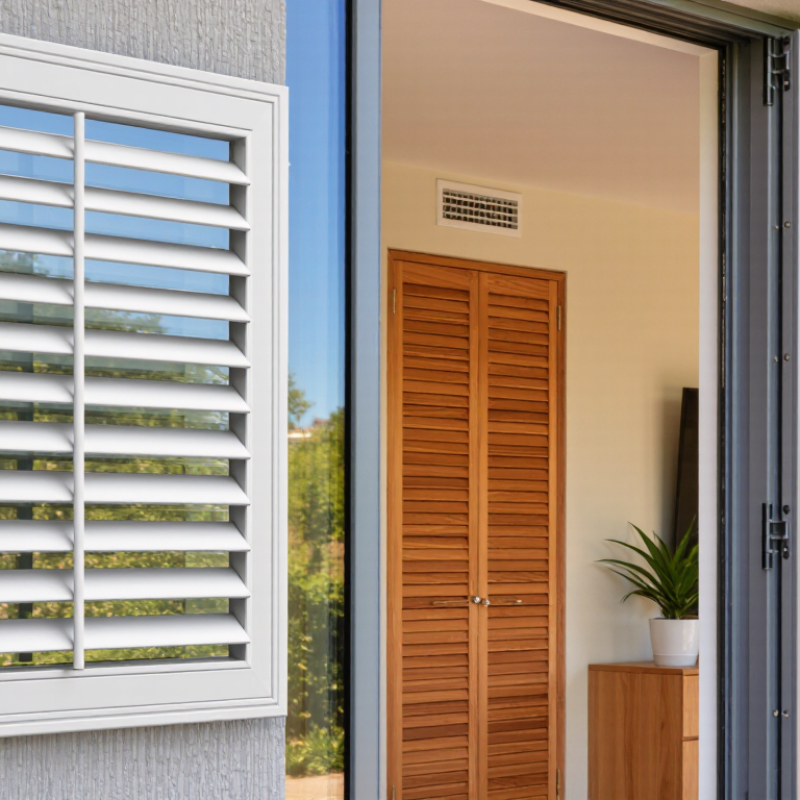
What Makes a Window Shutter Material Durable in 2026?
What Makes a Window Shutter Material Durable in 2026?
A durable window shutter must resist moisture, sunlight, temperature changes, and daily handling.
Material choice matters, but construction quality matters just as much. Moisture finds weak points. Joints, hinges, and bottom edges often fail before the main panels.
In humid rooms, composite materials and well-sealed polymers can reduce swelling and surface damage. Aluminum offers strong resistance to moisture and insects, especially when its coating remains intact.
Wood can still perform well when it is properly seasoned, sealed, and maintained.
However, it reacts to humidity and may require refinishing over time. That is not always a weakness. Repairable materials can last longer than products designed for quick replacement.
I have seen small coating defects become larger problems near kitchen sinks and sunny windows. Regular inspection catches these issues early.
Durability also depends on thermal movement. A shutter that expands or contracts unevenly may stick, crack, or stress its hardware.
Look for stable cores, corrosion-resistant fasteners, smooth operating tracks, and tested finishes.
Recycled content is valuable, but it should not replace evidence of strength and weather resistance. No material is perfect.
Even a strong shutter can fail when installation is rushed or cleaning is neglected.
In 2026, the most dependable choice balances moisture resistance, structural stability, repairability, and suitable installation for the room.
Comparing Wood, Vinyl, Composite, Aluminum, and Fiberglass Shutters
2026 Best Material for Durable Window Shutters?
Comparing Wood, Vinyl, Composite, Aluminum, and Fiberglass Shutters
Durability depends on climate, installation, and maintenance, not material alone. In field assessments, wood shutters offer natural insulation and a warm, painted finish. They can warp near leaking windows or in persistently damp rooms. Regular sealing matters. Vinyl handles humidity well and needs little repainting. However, inexpensive vinyl may become brittle under intense sunlight or heavy temperature changes.
Composite shutters balance appearance and resistance. Their engineered cores tolerate moisture better than many solid-wood designs. They still need careful sealing around hinges and cut edges. Aluminum provides strong impact resistance and suits wide openings. It can feel cold indoors and may transfer outdoor heat quickly. Scratched coatings also deserve prompt attention, especially near coastal air.
Fiberglass remains a strong choice for exposed windows because it resists warping and temperature movement. It usually costs more, and its finish options can feel less traditional. That tradeoff is easy to overlook. For a shaded bedroom, vinyl may be practical; for a historic interior, wood often looks more convincing. Coastal homes may favor fiberglass or coated aluminum, while humid bathrooms need moisture-tolerant construction. Ask for tested data on finish adhesion, hinge strength, and water exposure. A shutter can be durable on paper yet fail after poor measuring or rushed installation. That part is often underestimated.
How Climate and Moisture Affect Shutter Material Performance
2026 Best Material for Durable Window Shutters?
Climate is not a backdrop; it is a durability test. The U.S. Environmental Protection Agency recommends indoor relative humidity between 30% and 50%. That range matters. The USDA Forest Products Laboratory’s Wood Handbook reports that wood moisture content can rise from roughly 6% at 30% humidity to about 9% at 50%, under standard indoor conditions. Repeated swelling and shrinking can loosen joints, crack coatings, and distort shutter panels.
Wood can still perform well when sealed on every edge and kept away from standing water. However, humid coastal homes create tougher conditions. Salt air accelerates corrosion around metal hardware, while poor ventilation traps dampness behind closed shutters. It is easy to underestimate that hidden surface.
Moisture-resistant composite, cellular PVC, and fiberglass materials usually offer better stability in wet climates. They do not absorb water like untreated timber. Yet they are not maintenance-free. The U.S. Department of Energy notes that windows and related openings can account for 25% to 30% of residential heating and cooling energy use, making fit and installation important. Poorly fitted shutters may hold condensation against the frame.
My practical choice is composite or fiberglass for humid, rainy regions, especially with frequent temperature changes. In dry climates, properly finished wood remains attractive and dependable. That is not a perfect rule. Local exposure, drainage, hardware quality, and annual inspection can matter more than the material label.
2026 Best Material for Durable Window Shutters? - How Climate and Moisture Affect Shutter Material Performance
| Shutter Material |
Humid / Coastal Climate |
Wet-Room Suitability |
Resistance to Rot, Mold and Corrosion |
Thermal Stability |
UV and Color Performance |
Typical Maintenance |
Best Climate Applications |
| Fiberglass Composite |
Excellent |
Excellent when properly sealed |
Does not rot; resists moisture and salt air |
Very high |
Very good with a UV-stable finish |
Low; clean and inspect hardware periodically |
Coastal, humid, rainy and high-temperature regions |
| Aluminum |
Very good |
Excellent |
No rot; protective coating helps prevent corrosion |
High, but expands and contracts with temperature |
Good with a durable powder-coated finish |
Low; rinse salt deposits and check coating damage |
Wet, sunny, coastal and storm-prone areas |
| uPVC / Cellular PVC |
Very good |
Excellent |
Resists water, rot and insects; hardware may still corrode |
Good; can expand in strong heat |
Good when formulated and finished for exterior UV exposure |
Very low; wash with mild soap and water |
Humid, rainy and low-maintenance residential settings |
| Engineered Wood Composite |
Good with complete sealing |
Suitable outside direct splash zones |
Better moisture stability than solid wood; exposed edges can swell |
Good |
Good with high-quality exterior paint or coating |
Moderate; repaint or reseal as the finish wears |
Moderate climates and protected exterior openings |
| Solid Hardwood |
Limited unless meticulously maintained |
Not recommended for direct water exposure |
Can rot, swell or support mold if moisture enters the finish |
Moderate; naturally responds to humidity changes |
Varies by species and finish; direct sun can fade coatings |
High; inspect, paint or reseal regularly |
Dry or temperate climates and sheltered interiors |
Overall guidance: Fiberglass composite generally offers the best balance of moisture resistance, dimensional stability and low maintenance for demanding climates. Aluminum is a strong choice for wet and coastal locations when its protective finish remains intact. Installation quality, sealed joints, drainage and corrosion-resistant hardware are essential for every material.
Evaluating Maintenance, Insulation, Security, and Lifespan
2026 Best Material for Durable Window Shutters?
Evaluating Maintenance, Insulation, Security, and Lifespan
The best shutter material depends on the failure you fear most. Composite shutters resist moisture, peeling, and routine repainting. They suit humid rooms and busy households. Wood offers excellent appearance and repairability, but it needs careful sealing. Unsealed edges can swell after repeated rain exposure. Aluminum provides strong frames and dependable security, yet it can conduct outdoor heat indoors. According to the U.S. Department of Energy’s Energy Saver guidance, windows represent roughly 25–30% of residential heating and cooling energy use. Shutters cannot fix poor glass, but tight installation can reduce drafts and solar gain.
Insulation needs more than a thick panel. Check the window’s U-factor and solar heat gain coefficient through National Fenestration Rating Council data. A low U-factor generally improves heat resistance. Exterior shutters can also shield glass from windborne debris, but security depends on hinges, anchors, locks, and wall structure. The Federal Emergency Management Agency recommends tested opening-protection systems in hazard-prone regions. Lifespan claims deserve skepticism. Installation quality, drainage, ultraviolet exposure, and cleaning often matter more than the material label. My practical view is slightly inconvenient: the strongest shutter may still fail when fasteners corrode.
Tips: Choose composite for low maintenance and stable insulation. Choose aluminum for exposed openings and stronger physical resistance. Choose wood where repair and visual character matter. Ask for test results, warranty limits, corrosion resistance, and replacement-part availability. Inspect hinges twice yearly. Small gaps become expensive problems.
Conclusion
Choosing the best material for durable window shutters in 2026 depends on your climate, maintenance preferences, insulation needs, security priorities, and budget. Wood offers natural beauty and strong insulation but requires regular sealing, especially in humid or rainy areas. Vinyl is affordable and moisture-resistant, while composite shutters provide a balance of durability, stability, and style. Aluminum delivers excellent strength and security, although it may conduct heat more readily. Fiberglass is highly resistant to warping, cracking, moisture, and temperature changes, making it a strong choice for demanding environments.
So, what is the most durable material for window shutters? For many homes, fiberglass or high-quality composite offers the best overall lifespan with minimal maintenance. However, coastal properties may benefit from corrosion-resistant options, while colder climates may prioritize insulation. Before deciding, compare expected service life, cleaning requirements, climate performance, energy efficiency, and installation cost to find the material that provides the most reliable value for your home.

 Green Earth Wood